Unreasonable Labs Unleashes AI Superintelligence for Global Discovery
March 12, 2026, 9:47 am

Location: United States
Employees: 5001-10000
Founded date: 1861
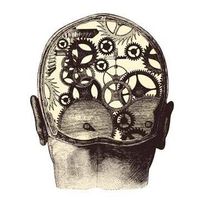

Unreasonable Labs, a groundbreaking AI venture, emerged from stealth with $13.5 million in funding. The company targets accelerated scientific discovery. Its innovative platform integrates large language models with neurosymbolic knowledge graphs. This system generates novel hypotheses and breakthroughs. It addresses critical limitations of current AI in research. The technology promises to revolutionize R&D across chemistry, materials science, and biology. Founders from Google DeepMind and MIT lead the charge. This "superintelligence" aims to orchestrate the full discovery cycle, from ideation to experimentation. It promises to transform research timelines, delivering results in weeks instead of years. The investment signals a new era for AI-driven innovation and human ingenuity.
Unreasonable Labs just launched. The company secured $13.5 million in new funding. This capital fuels its ambitious mission. It aims to accelerate scientific discovery. Playground Global led the investment round. AIX Ventures, E14 Fund, and MS&AD Ventures also contributed. This substantial backing will scale their core technology. It expands their technical team and platform.
The startup positions itself at science's frontier. It builds "superintelligence" for knowledge discovery. This engine moves beyond existing AI limitations. Current models often summarize known information. They struggle with true novelty. They fail to connect disparate scientific domains. Unreasonable Labs targets this critical gap.
Their solution integrates powerful components. It combines large language models (LLMs). These models handle vast amounts of unstructured data. They understand complex language patterns. But LLMs alone are insufficient for deep scientific discovery. Unreasonable Labs enhances them.
The platform adds structured knowledge networks. These are knowledge graphs. They map entities and relationships across scientific fields. This creates a verifiable data structure. It transforms raw information into actionable insights. Mathematical abstractions further refine this process. They are neurosymbolic.
These neurosymbolic abstractions enable causal reasoning. They allow the AI to understand "why" something happens. This goes beyond simple correlation. It fosters systematic exploration. Researchers can guide and edit the AI's reasoning. This ensures explainability and scientific rigor.
The technology generates new scientific hypotheses. It predicts novel material properties. It proposes new chemical reactions. It identifies biological pathways. These are true discoveries, not just summaries. The system synthesizes knowledge across multiple disciplines. It bridges gaps long unaddressed.
Consider a researcher. They need to develop a new battery material. Traditional methods are slow. They involve countless physical experiments. Unreasonable Labs' platform can accelerate this. It sifts through vast chemical and materials science data. It finds analogous concepts in unrelated fields. Perhaps a biological process offers inspiration.
The AI then proposes novel material compositions. It suggests optimal structures. It tests these ideas virtually. Physics-based simulations validate hypotheses. This reduces the need for costly lab trials. Only the most promising candidates move to physical experimentation. This saves immense time and resources.
The system translates discoveries into practical protocols. These are ready for execution. This streamlines the entire R&D pipeline. From initial idea to experimental validation, the process is orchestrated. Unreasonable Labs calls it an "operating system for scientific research." It acts as a comprehensive discovery engine.
Founders bring deep expertise. Yuan Cao co-founded the company. He previously served as a senior staff research scientist at Google DeepMind. Markus Buehler is another co-founder. He is an MIT engineering professor. His work focuses on AI-driven materials science. Their combined experience anchors the startup's vision.
The company already engages with industry partners. Pilot programs are underway. These span energy transition. They cover materials science. Pharmaceutical development also benefits. These collaborations demonstrate early commercial traction. They validate the platform's practical applications.
An impressive advisory board supports Unreasonable Labs. It includes Nobel laureate Kostya Novoselov. MIT Institute Professor Robert Langer also advises. He is a prominent biotech entrepreneur. Thomas Wolf, Hugging Face co-founder, also provides guidance. Such caliber strengthens the company's credibility.
Unreasonable Labs promises profound impact. It could revolutionize drug discovery. New medicines could emerge faster. Materials science could see rapid advancements. Sustainable energy solutions might accelerate. The platform enables R&D teams to solve problems in weeks. These tasks once took years.
The company maintains offices in Cambridge, Massachusetts. It also operates in Palo Alto, California. This dual presence taps into key innovation hubs. It leverages top talent pools. Unreasonable Labs aims to redefine how humanity discovers. It paves the way for a future shaped by AI-driven ingenuity. This investment marks a significant step. It signals a new era of accelerated scientific progress.
Unreasonable Labs just launched. The company secured $13.5 million in new funding. This capital fuels its ambitious mission. It aims to accelerate scientific discovery. Playground Global led the investment round. AIX Ventures, E14 Fund, and MS&AD Ventures also contributed. This substantial backing will scale their core technology. It expands their technical team and platform.
The startup positions itself at science's frontier. It builds "superintelligence" for knowledge discovery. This engine moves beyond existing AI limitations. Current models often summarize known information. They struggle with true novelty. They fail to connect disparate scientific domains. Unreasonable Labs targets this critical gap.
Their solution integrates powerful components. It combines large language models (LLMs). These models handle vast amounts of unstructured data. They understand complex language patterns. But LLMs alone are insufficient for deep scientific discovery. Unreasonable Labs enhances them.
The platform adds structured knowledge networks. These are knowledge graphs. They map entities and relationships across scientific fields. This creates a verifiable data structure. It transforms raw information into actionable insights. Mathematical abstractions further refine this process. They are neurosymbolic.
These neurosymbolic abstractions enable causal reasoning. They allow the AI to understand "why" something happens. This goes beyond simple correlation. It fosters systematic exploration. Researchers can guide and edit the AI's reasoning. This ensures explainability and scientific rigor.
The technology generates new scientific hypotheses. It predicts novel material properties. It proposes new chemical reactions. It identifies biological pathways. These are true discoveries, not just summaries. The system synthesizes knowledge across multiple disciplines. It bridges gaps long unaddressed.
Consider a researcher. They need to develop a new battery material. Traditional methods are slow. They involve countless physical experiments. Unreasonable Labs' platform can accelerate this. It sifts through vast chemical and materials science data. It finds analogous concepts in unrelated fields. Perhaps a biological process offers inspiration.
The AI then proposes novel material compositions. It suggests optimal structures. It tests these ideas virtually. Physics-based simulations validate hypotheses. This reduces the need for costly lab trials. Only the most promising candidates move to physical experimentation. This saves immense time and resources.
The system translates discoveries into practical protocols. These are ready for execution. This streamlines the entire R&D pipeline. From initial idea to experimental validation, the process is orchestrated. Unreasonable Labs calls it an "operating system for scientific research." It acts as a comprehensive discovery engine.
Founders bring deep expertise. Yuan Cao co-founded the company. He previously served as a senior staff research scientist at Google DeepMind. Markus Buehler is another co-founder. He is an MIT engineering professor. His work focuses on AI-driven materials science. Their combined experience anchors the startup's vision.
The company already engages with industry partners. Pilot programs are underway. These span energy transition. They cover materials science. Pharmaceutical development also benefits. These collaborations demonstrate early commercial traction. They validate the platform's practical applications.
An impressive advisory board supports Unreasonable Labs. It includes Nobel laureate Kostya Novoselov. MIT Institute Professor Robert Langer also advises. He is a prominent biotech entrepreneur. Thomas Wolf, Hugging Face co-founder, also provides guidance. Such caliber strengthens the company's credibility.
Unreasonable Labs promises profound impact. It could revolutionize drug discovery. New medicines could emerge faster. Materials science could see rapid advancements. Sustainable energy solutions might accelerate. The platform enables R&D teams to solve problems in weeks. These tasks once took years.
The company maintains offices in Cambridge, Massachusetts. It also operates in Palo Alto, California. This dual presence taps into key innovation hubs. It leverages top talent pools. Unreasonable Labs aims to redefine how humanity discovers. It paves the way for a future shaped by AI-driven ingenuity. This investment marks a significant step. It signals a new era of accelerated scientific progress.