Master Your Message: Supercommunicator Strategies for Career Ascent
February 3, 2026, 3:45 am
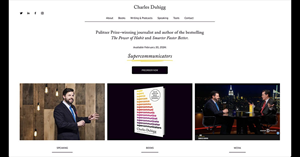

Effective communication is paramount for professional advancement and personal connection. Supercommunicators possess distinct strategies that elevate their influence. They approach job interviews with authenticity, revealing genuine self while tactfully addressing growth areas. Beyond superficial inquiries, they master asking deep questions, exploring values, beliefs, and experiences to forge meaningful rapport. Active listening is not passive; it involves paraphrasing and seeking confirmation, ensuring mutual understanding. Non-verbal mirroring subtly enhances connection. Crucially, supercommunicators discern varying conversational types—practical, emotional, social—and adapt their engagement for optimal alignment. These integrated skills transform interactions, driving career success and fostering profound relationships. They are learnable, powerful tools for anyone seeking greater impact.
Communication is power. It drives success. It shapes careers. Strong communication skills are not merely an advantage; they are essential. Experts confirm this. They define who gets promoted. They determine who thrives in the competitive professional landscape. Mastering these skills transforms interactions. It unlocks significant career advancement and deeper connections in all areas of life. Becoming a "supercommunicator" is within reach. It demands specific practices.
Authenticity is paramount. Interviewers value genuine responses. Avoid sounding rehearsed or canned. Convey your true self. This allows employers to see a potential fit. Realness builds trust. It leaves a lasting impression. Your genuine self makes you memorable. It distinguishes you from the crowd.
Addressing weaknesses strategically also highlights authenticity. Everyone has areas for growth. Do not expose fundamental flaws crucial to the job. Instead, identify a genuine weakness. Briefly explain it. Detail the steps you take for improvement. This demonstrates self-awareness. It shows initiative. It proves a commitment to personal development. This approach turns a potential negative into a positive. It showcases maturity and a proactive mindset.
Supercommunicators excel at inquiry. They ask questions. Not just any questions, but deep questions. Surface-level inquiries merely gather facts. Deep questions explore values, beliefs, and experiences. They uncover motivations. They reveal perspectives. For instance, instead of asking about a job title, inquire about what inspired their career path. This approach fosters a deeper bond. It shows genuine interest. People appreciate being truly understood. This skill builds rapport. It encourages others to open up. Deep questions make conversations memorable. They unlock richer exchanges.
Listening is not a passive act. It requires active engagement. Supercommunicators demonstrate their listening. They do not just hear words. They process them. They confirm understanding. A key technique involves paraphrasing. Repeat back what you heard in your own words. This shows you are thinking. It proves you are taking information in. Follow up with a clarifying question. Ask, "Did I get that right?" or "Did I hear you correctly?" This ensures accuracy. It signals your care for precision. This active verification builds mutual understanding. It encourages others to reciprocate. When you show you listen, others are more likely to listen to you.
Non-verbal cues profoundly influence communication. Silent signals speak volumes. Body language matters. Supercommunicators consciously use it. They mirror subtle gestures. They match posture. They reflect expressions. If someone smiles, smile back. If they lean in, subtly do the same. These actions create comfort. They build subconscious rapport. They make you seem more approachable. This mirroring should feel natural. It requires awareness. Preparedness helps these non-verbal interactions flow smoothly. They enhance connection without a single word.
Conversations often contain multiple layers. They are not always singular. Supercommunicators recognize this complexity. They identify different conversational types. These include practical, emotional, and social. Practical conversations focus on problem-solving or making choices. Emotional conversations center on feelings and empathy. Social conversations involve relating to others and societal norms. Misalignment can cause frustration. If one person seeks empathy and the other offers solutions, a disconnect occurs. Supercommunicators identify the prevailing type. They adapt their response. They meet the other person where they are. This alignment ensures mutual understanding. It strengthens the connection. Successful communication requires having the same kind of conversation at the same time.
Mastering these strategies elevates your communication. It transforms your professional interactions. It enhances your personal relationships. Authenticity, strategic inquiry, active listening, and conversational awareness are powerful tools. They are learnable. They are essential. Embrace them. Become a supercommunicator. Command attention. Build influence. Drive your career ascent. Your clear, impactful message will resonate. Your connections will deepen. Your success will follow. These are not just tips. They are pathways to mastery.
Communication is power. It drives success. It shapes careers. Strong communication skills are not merely an advantage; they are essential. Experts confirm this. They define who gets promoted. They determine who thrives in the competitive professional landscape. Mastering these skills transforms interactions. It unlocks significant career advancement and deeper connections in all areas of life. Becoming a "supercommunicator" is within reach. It demands specific practices.
Authenticity is paramount. Interviewers value genuine responses. Avoid sounding rehearsed or canned. Convey your true self. This allows employers to see a potential fit. Realness builds trust. It leaves a lasting impression. Your genuine self makes you memorable. It distinguishes you from the crowd.
Addressing weaknesses strategically also highlights authenticity. Everyone has areas for growth. Do not expose fundamental flaws crucial to the job. Instead, identify a genuine weakness. Briefly explain it. Detail the steps you take for improvement. This demonstrates self-awareness. It shows initiative. It proves a commitment to personal development. This approach turns a potential negative into a positive. It showcases maturity and a proactive mindset.
Supercommunicators excel at inquiry. They ask questions. Not just any questions, but deep questions. Surface-level inquiries merely gather facts. Deep questions explore values, beliefs, and experiences. They uncover motivations. They reveal perspectives. For instance, instead of asking about a job title, inquire about what inspired their career path. This approach fosters a deeper bond. It shows genuine interest. People appreciate being truly understood. This skill builds rapport. It encourages others to open up. Deep questions make conversations memorable. They unlock richer exchanges.
Listening is not a passive act. It requires active engagement. Supercommunicators demonstrate their listening. They do not just hear words. They process them. They confirm understanding. A key technique involves paraphrasing. Repeat back what you heard in your own words. This shows you are thinking. It proves you are taking information in. Follow up with a clarifying question. Ask, "Did I get that right?" or "Did I hear you correctly?" This ensures accuracy. It signals your care for precision. This active verification builds mutual understanding. It encourages others to reciprocate. When you show you listen, others are more likely to listen to you.
Non-verbal cues profoundly influence communication. Silent signals speak volumes. Body language matters. Supercommunicators consciously use it. They mirror subtle gestures. They match posture. They reflect expressions. If someone smiles, smile back. If they lean in, subtly do the same. These actions create comfort. They build subconscious rapport. They make you seem more approachable. This mirroring should feel natural. It requires awareness. Preparedness helps these non-verbal interactions flow smoothly. They enhance connection without a single word.
Conversations often contain multiple layers. They are not always singular. Supercommunicators recognize this complexity. They identify different conversational types. These include practical, emotional, and social. Practical conversations focus on problem-solving or making choices. Emotional conversations center on feelings and empathy. Social conversations involve relating to others and societal norms. Misalignment can cause frustration. If one person seeks empathy and the other offers solutions, a disconnect occurs. Supercommunicators identify the prevailing type. They adapt their response. They meet the other person where they are. This alignment ensures mutual understanding. It strengthens the connection. Successful communication requires having the same kind of conversation at the same time.
Mastering these strategies elevates your communication. It transforms your professional interactions. It enhances your personal relationships. Authenticity, strategic inquiry, active listening, and conversational awareness are powerful tools. They are learnable. They are essential. Embrace them. Become a supercommunicator. Command attention. Build influence. Drive your career ascent. Your clear, impactful message will resonate. Your connections will deepen. Your success will follow. These are not just tips. They are pathways to mastery.