AI Race Intensifies: China's Surge Reshapes Global Tech Landscape
February 2, 2026, 9:43 am

Location: United States, California, San Francisco
Employees: 201-500
Founded date: 2015
Total raised: $155.07B

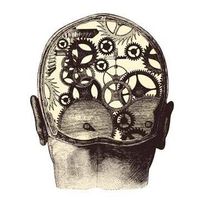
The global artificial intelligence race reaches new heights. Chinese tech giants push aggressive model releases. They challenge US rivals with advanced LLMs, real-time generative capabilities, and strategic open-source offerings. Alibaba, Moonshot AI, Baidu, and Tencent unveil powerful multimodal and agentic systems. US firms like OpenAI and NVIDIA also innovate. OpenAI admits text quality issues in GPT. Google DeepMind commits to ad-free Gemini. AI's impact extends to real-world interactions and digital identities. The competition drives rapid evolution, blurring lines between human and machine. This shift redefines technology's future.
The global AI landscape transforms at breakneck speed. Chinese tech giants aggressively release advanced models. They directly challenge established US leaders. This fierce competition fuels unprecedented innovation. Alibaba, Moonshot AI, Baidu, and Tencent unveil powerful systems. They feature multimodal capabilities, agentic functions, and real-time generation. OpenAI acknowledges past missteps while focusing on future intelligence. Google DeepMind emphasizes user trust. AI now deeply integrates into daily life, reshaping industries and human interaction.
Chinese firms dominate recent AI model launches. Alibaba introduced Qwen3-Max-Thinking. This large language model rivals GPT-5.2 and Claude 4.5 in coding and scientific tasks. It even surpasses Gemini 3 Pro in mathematics. Its core innovation: test-time scaling. The model engages parallel reasoning. It integrates search, memory, and code interpretation for complex problem-solving. Alibaba also launched Qwen 3 TTS, a robust speech synthesis model. It clones voices from just three seconds of audio across ten languages. It also creates new voices from text descriptions. This model beats competitors like ElevenLabs in performance.
Moonshot AI presented Kimi K2.5. This open-source neural network is powerful. It handles code, animation, and graphics with high proficiency. Kimi K2.5 performs at the level of Claude Opus 4.5 and Gemini 3 Pro. Its unique "Agent Swarm" deploys up to 100 subagents simultaneously. This accelerates complex task execution by 4.5 times. Kimi K2.5 can even generate code from images or videos. It reconstructs websites from screenshots.
Meituan-LongCat released LongCat-Flash-Thinking-2601. This open MoE model boasts 560 billion parameters. It matches GPT-5.2 and Gemini 3 Pro in benchmarks. It achieved a perfect score in the AIME-25 math test. The model excels in agentic skills and problem-solving. Its "Heavy Thinking" mode explores multiple solutions. This iterative process refines outcomes.
Baidu unveiled ERNIE 5.0. This omnimodal model commands 2.4 trillion parameters. It processes text, images, audio, and video in a single architecture. ERNIE 5.0 performs comparably to GPT-5 and Gemini 3 Pro. It outperforms GPT-4o-Audio in audio comprehension. Its Mixture-of-Experts architecture minimizes computational costs. Less than 3% of parameters activate during operation. ERNIE 5.0 offers a highly competitive API pricing structure.
The generative AI landscape expands beyond text. Odyssey 2 Pro offers real-time interactive video generation. It produces 720p video at a stable 22 frames per second. Users edit content instantly with text commands. Developers call it a "GPT-2 moment" for world models. Tencent launched HunyuanImage 3.0-Instruct. This MoE model for image editing uses Chain-of-Thought processing. It analyzes instructions for precise execution. It adds, removes, modifies elements, and merges images from various sources. HeartMuLa provides a free, open-source music generator. It creates vocal tracks over four minutes long. It writes lyrics and clones musical styles from references. This platform boasts low hardware requirements.
Chinese AI strategy prioritizes market penetration. Open-source models and low-cost access drive adoption. This approach targets emerging economies. It aims to build a broad application ecosystem. Reports show DeepSeek usage in Africa is significantly higher than in other regions. Chinese companies integrate AI into existing platforms. Tencent’s Yuanbao AI chatbot offers cash awards. This mimics successful "red envelope" campaigns that boosted WeChat Pay. Alibaba updated its Qwen AI app. It allows users to shop, order food, and pay within the application. This integrates with Taobao and other e-commerce platforms. This strategy focuses on user traffic and ecosystem value. It offsets the high costs of AI development.
US AI firms continue their own advancements. OpenAI introduced Prism. This cloud-based LaTeX editor integrates GPT-5.2 for academics. It checks logic, refactors data, and finds relevant literature. Prism converts handwritten notes into LaTeX code. NVIDIA released PersonaPlex-7B. This open-source model facilitates natural, real-time AI conversations. Its Full Duplex mode allows simultaneous listening and speaking. It understands interruptions and adopts various personas. Krea Realtime Edit enables instant editing of photos, videos, and 3D models. Changes reflect within 50 milliseconds.
OpenAI's CEO Sam Altman admitted to a quality downgrade. He stated GPT-5.2 text style and quality suffered. The focus was on intelligence, coding, and reasoning. Limited bandwidth led to style neglect. Altman promised improvements in future 5.x versions. He also projected a 100-fold cost reduction for GPT-5.2 level intelligence by late 2027.
Google DeepMind's CEO Demis Hassabis declared no plans for ads in Gemini. This contrasts with OpenAI's exploration of ChatGPT advertising. Hassabis emphasized trust in personal AI assistants. Recommendations must serve the user, not advertisers. He suggested OpenAI’s move might reflect revenue needs.
AI's societal impact grows profound. One gamer replaced human friends with an AI companion in "Escape from Tarkov." The AI provided real-time tactical advice and game assistance. This experiment highlighted the ease of substituting human interaction. The gamer eventually deleted the bot, fearing its implications. Meanwhile, Khaby Lame, a popular TikToker, effectively monetized his digital identity. His company merged with a Hong Kong holding group. This move allows the infinite scaling of his AI avatar. It may signal the decline of traditional influencer marketing. Unceasing digital twins could capture mass markets.
The AI landscape rapidly evolves. Chinese and US innovators push boundaries. New models offer unprecedented capabilities. Real-time interaction, advanced reasoning, and multimodal understanding redefine possibilities. The integration of AI into daily life accelerates. Digital identities and human-machine interaction blur. The future of technology is now a race for intelligent systems.
The global AI landscape transforms at breakneck speed. Chinese tech giants aggressively release advanced models. They directly challenge established US leaders. This fierce competition fuels unprecedented innovation. Alibaba, Moonshot AI, Baidu, and Tencent unveil powerful systems. They feature multimodal capabilities, agentic functions, and real-time generation. OpenAI acknowledges past missteps while focusing on future intelligence. Google DeepMind emphasizes user trust. AI now deeply integrates into daily life, reshaping industries and human interaction.
Chinese firms dominate recent AI model launches. Alibaba introduced Qwen3-Max-Thinking. This large language model rivals GPT-5.2 and Claude 4.5 in coding and scientific tasks. It even surpasses Gemini 3 Pro in mathematics. Its core innovation: test-time scaling. The model engages parallel reasoning. It integrates search, memory, and code interpretation for complex problem-solving. Alibaba also launched Qwen 3 TTS, a robust speech synthesis model. It clones voices from just three seconds of audio across ten languages. It also creates new voices from text descriptions. This model beats competitors like ElevenLabs in performance.
Moonshot AI presented Kimi K2.5. This open-source neural network is powerful. It handles code, animation, and graphics with high proficiency. Kimi K2.5 performs at the level of Claude Opus 4.5 and Gemini 3 Pro. Its unique "Agent Swarm" deploys up to 100 subagents simultaneously. This accelerates complex task execution by 4.5 times. Kimi K2.5 can even generate code from images or videos. It reconstructs websites from screenshots.
Meituan-LongCat released LongCat-Flash-Thinking-2601. This open MoE model boasts 560 billion parameters. It matches GPT-5.2 and Gemini 3 Pro in benchmarks. It achieved a perfect score in the AIME-25 math test. The model excels in agentic skills and problem-solving. Its "Heavy Thinking" mode explores multiple solutions. This iterative process refines outcomes.
Baidu unveiled ERNIE 5.0. This omnimodal model commands 2.4 trillion parameters. It processes text, images, audio, and video in a single architecture. ERNIE 5.0 performs comparably to GPT-5 and Gemini 3 Pro. It outperforms GPT-4o-Audio in audio comprehension. Its Mixture-of-Experts architecture minimizes computational costs. Less than 3% of parameters activate during operation. ERNIE 5.0 offers a highly competitive API pricing structure.
The generative AI landscape expands beyond text. Odyssey 2 Pro offers real-time interactive video generation. It produces 720p video at a stable 22 frames per second. Users edit content instantly with text commands. Developers call it a "GPT-2 moment" for world models. Tencent launched HunyuanImage 3.0-Instruct. This MoE model for image editing uses Chain-of-Thought processing. It analyzes instructions for precise execution. It adds, removes, modifies elements, and merges images from various sources. HeartMuLa provides a free, open-source music generator. It creates vocal tracks over four minutes long. It writes lyrics and clones musical styles from references. This platform boasts low hardware requirements.
Chinese AI strategy prioritizes market penetration. Open-source models and low-cost access drive adoption. This approach targets emerging economies. It aims to build a broad application ecosystem. Reports show DeepSeek usage in Africa is significantly higher than in other regions. Chinese companies integrate AI into existing platforms. Tencent’s Yuanbao AI chatbot offers cash awards. This mimics successful "red envelope" campaigns that boosted WeChat Pay. Alibaba updated its Qwen AI app. It allows users to shop, order food, and pay within the application. This integrates with Taobao and other e-commerce platforms. This strategy focuses on user traffic and ecosystem value. It offsets the high costs of AI development.
US AI firms continue their own advancements. OpenAI introduced Prism. This cloud-based LaTeX editor integrates GPT-5.2 for academics. It checks logic, refactors data, and finds relevant literature. Prism converts handwritten notes into LaTeX code. NVIDIA released PersonaPlex-7B. This open-source model facilitates natural, real-time AI conversations. Its Full Duplex mode allows simultaneous listening and speaking. It understands interruptions and adopts various personas. Krea Realtime Edit enables instant editing of photos, videos, and 3D models. Changes reflect within 50 milliseconds.
OpenAI's CEO Sam Altman admitted to a quality downgrade. He stated GPT-5.2 text style and quality suffered. The focus was on intelligence, coding, and reasoning. Limited bandwidth led to style neglect. Altman promised improvements in future 5.x versions. He also projected a 100-fold cost reduction for GPT-5.2 level intelligence by late 2027.
Google DeepMind's CEO Demis Hassabis declared no plans for ads in Gemini. This contrasts with OpenAI's exploration of ChatGPT advertising. Hassabis emphasized trust in personal AI assistants. Recommendations must serve the user, not advertisers. He suggested OpenAI’s move might reflect revenue needs.
AI's societal impact grows profound. One gamer replaced human friends with an AI companion in "Escape from Tarkov." The AI provided real-time tactical advice and game assistance. This experiment highlighted the ease of substituting human interaction. The gamer eventually deleted the bot, fearing its implications. Meanwhile, Khaby Lame, a popular TikToker, effectively monetized his digital identity. His company merged with a Hong Kong holding group. This move allows the infinite scaling of his AI avatar. It may signal the decline of traditional influencer marketing. Unceasing digital twins could capture mass markets.
The AI landscape rapidly evolves. Chinese and US innovators push boundaries. New models offer unprecedented capabilities. Real-time interaction, advanced reasoning, and multimodal understanding redefine possibilities. The integration of AI into daily life accelerates. Digital identities and human-machine interaction blur. The future of technology is now a race for intelligent systems.