
SpaceX IPO: The Trillion-Dollar Frontier Ignites New Space Economy
January 30, 2026, 3:37 pm
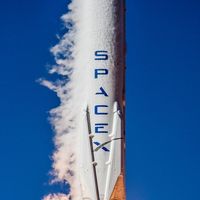
SpaceX plans a monumental 2026 IPO, potentially valuing it at $1.5 trillion. This could make Elon Musk the world's first trillionaire. The IPO fuels ambitious space ventures, including lunar missions and orbital data centers. Starlink expands globally but faces regulatory hurdles and market realities, especially in developing regions like South Africa. Musk’s ventures drive a new extraterrestrial economy, disrupting traditional markets from Earth to orbit.
SpaceX stands on the brink of history. A 2026 IPO is in motion. Financial officers are selecting banks. This move aims to fund Moon and Mars missions. It will also finance future orbital data centers. Estimates place SpaceX's IPO valuation at $1.5 trillion. This would be the largest public offering ever. It eclipses past records. Musk owns 42% of the company. A successful IPO could make him the first trillionaire. This event signals a new era in space finance.
Elon Musk's fortune nears $750 billion. His empire expands relentlessly. Tesla leads the charge. Its valuation sits at $1.63 trillion. Musk holds a 12% stake. Investors recently approved a $1 trillion compensation package for him. They back his vision. Tesla aims beyond electric vehicles. It targets AI and robotics dominance. xAI is another key driver. The AI startup seeks $15 billion in new investments. Its valuation reached $230 billion. Grok, its large language model, shows rapid growth. SpaceX, privately valued at $800 billion, completes the trifecta. These ventures propel Musk towards unprecedented wealth.
Starlink demonstrates rapid expansion. It now boasts over 9 million users. This represents massive growth. The satellite internet service adds over 21,000 users daily. Such expansion underpins SpaceX's valuation. Starlink connects remote areas. It offers high-speed broadband. This capability is critical for global connectivity. The service fuels terrestrial and extraterrestrial ambitions. Its success validates SpaceX's broader strategy.
Starlink faces unique challenges. South Africa presents a stark example. Regulatory hurdles persist. Local laws mandate 30% Black equity ownership. SpaceX's global policy prohibits local dilution. This created an impasse. A R2.5 billion local investment commitment emerged. It includes connecting 5,000 schools free. Regulatory alignment is now awaited. The "hype" contrasts with market realities. OneWeb and Amazon Leo already operate or plan launches. These rivals receive less public attention.
"Affordable" for Starlink needs context. Pricing in nearby nations reveals high costs. Monthly fees hover around R900-R950. Equipment costs add R3,800. This places Starlink at the high end. Fibre-to-the-home often matches these prices. South Africa's fixed broadband market is finite. Most high-income households already have premium internet. The addressable market for Starlink is therefore smaller than perceived. It serves a fraction of wealthier homes. Lower-income areas see different solutions. Companies offer R5/day internet. Starlink's current model does not compete here.
Starlink's true value lies elsewhere. Remote areas are its sweet spot. Game farms, forestry stations, rural schools all benefit. Traditional infrastructure is unviable there. Starlink delivers connectivity to a site. It is not a complete solution. This creates an ecosystem opportunity. Local wireless ISPs can build last-mile infrastructure. They manage networks. They provide technical services. They bridge the gap. Starlink provides the satellite link. Local providers make it usable. This partnership model is crucial for widespread adoption.
SpaceX's IPO ignites new markets. A future extraterrestrial economy emerges. Lunar mining rights could spark a frenzy. They may resemble an NFT boom. Prices could soar, then stabilize. Space manufacturing offers vast potential. Zero-gravity conditions are ideal. Crystal growth for semiconductors thrives. Biopharmaceutical applications expand. 3D bioprinting can create superior structures. Orbital data centers represent another frontier. They leverage solar power and cosmic cold. This vision redefines infrastructure. It moves computing beyond Earth's surface.
Musk's strategy is bold. He disrupts entire industries. From electric cars to rockets, then AI. Now, the extraterrestrial realm. His approach often includes symbolic gestures. IPO timing linked to planetary alignment shows this. His past decisions also reflect this trait. He focuses on fundamental shifts. He creates new "games" rather than just playing. This vision drives innovation. It reshapes global technology.
The space race intensifies. SpaceX leads the charge. Its IPO will inject massive capital. This accelerates space exploration. It funds critical infrastructure. Starlink will connect the disconnected. Competition will rise. Amazon Leo and China's constellations will enter. The market will divide. Universal access requires tailored strategies. Local partnerships are essential. The future holds unprecedented opportunity. Human civilization expands into space.
SpaceX stands on the brink of history. A 2026 IPO is in motion. Financial officers are selecting banks. This move aims to fund Moon and Mars missions. It will also finance future orbital data centers. Estimates place SpaceX's IPO valuation at $1.5 trillion. This would be the largest public offering ever. It eclipses past records. Musk owns 42% of the company. A successful IPO could make him the first trillionaire. This event signals a new era in space finance.
Elon Musk's fortune nears $750 billion. His empire expands relentlessly. Tesla leads the charge. Its valuation sits at $1.63 trillion. Musk holds a 12% stake. Investors recently approved a $1 trillion compensation package for him. They back his vision. Tesla aims beyond electric vehicles. It targets AI and robotics dominance. xAI is another key driver. The AI startup seeks $15 billion in new investments. Its valuation reached $230 billion. Grok, its large language model, shows rapid growth. SpaceX, privately valued at $800 billion, completes the trifecta. These ventures propel Musk towards unprecedented wealth.
Starlink demonstrates rapid expansion. It now boasts over 9 million users. This represents massive growth. The satellite internet service adds over 21,000 users daily. Such expansion underpins SpaceX's valuation. Starlink connects remote areas. It offers high-speed broadband. This capability is critical for global connectivity. The service fuels terrestrial and extraterrestrial ambitions. Its success validates SpaceX's broader strategy.
Starlink faces unique challenges. South Africa presents a stark example. Regulatory hurdles persist. Local laws mandate 30% Black equity ownership. SpaceX's global policy prohibits local dilution. This created an impasse. A R2.5 billion local investment commitment emerged. It includes connecting 5,000 schools free. Regulatory alignment is now awaited. The "hype" contrasts with market realities. OneWeb and Amazon Leo already operate or plan launches. These rivals receive less public attention.
"Affordable" for Starlink needs context. Pricing in nearby nations reveals high costs. Monthly fees hover around R900-R950. Equipment costs add R3,800. This places Starlink at the high end. Fibre-to-the-home often matches these prices. South Africa's fixed broadband market is finite. Most high-income households already have premium internet. The addressable market for Starlink is therefore smaller than perceived. It serves a fraction of wealthier homes. Lower-income areas see different solutions. Companies offer R5/day internet. Starlink's current model does not compete here.
Starlink's true value lies elsewhere. Remote areas are its sweet spot. Game farms, forestry stations, rural schools all benefit. Traditional infrastructure is unviable there. Starlink delivers connectivity to a site. It is not a complete solution. This creates an ecosystem opportunity. Local wireless ISPs can build last-mile infrastructure. They manage networks. They provide technical services. They bridge the gap. Starlink provides the satellite link. Local providers make it usable. This partnership model is crucial for widespread adoption.
SpaceX's IPO ignites new markets. A future extraterrestrial economy emerges. Lunar mining rights could spark a frenzy. They may resemble an NFT boom. Prices could soar, then stabilize. Space manufacturing offers vast potential. Zero-gravity conditions are ideal. Crystal growth for semiconductors thrives. Biopharmaceutical applications expand. 3D bioprinting can create superior structures. Orbital data centers represent another frontier. They leverage solar power and cosmic cold. This vision redefines infrastructure. It moves computing beyond Earth's surface.
Musk's strategy is bold. He disrupts entire industries. From electric cars to rockets, then AI. Now, the extraterrestrial realm. His approach often includes symbolic gestures. IPO timing linked to planetary alignment shows this. His past decisions also reflect this trait. He focuses on fundamental shifts. He creates new "games" rather than just playing. This vision drives innovation. It reshapes global technology.
The space race intensifies. SpaceX leads the charge. Its IPO will inject massive capital. This accelerates space exploration. It funds critical infrastructure. Starlink will connect the disconnected. Competition will rise. Amazon Leo and China's constellations will enter. The market will divide. Universal access requires tailored strategies. Local partnerships are essential. The future holds unprecedented opportunity. Human civilization expands into space.