SAS Soars into a Sustainable Future with Strategic Partnerships and Innovations
November 30, 2024, 5:08 pm
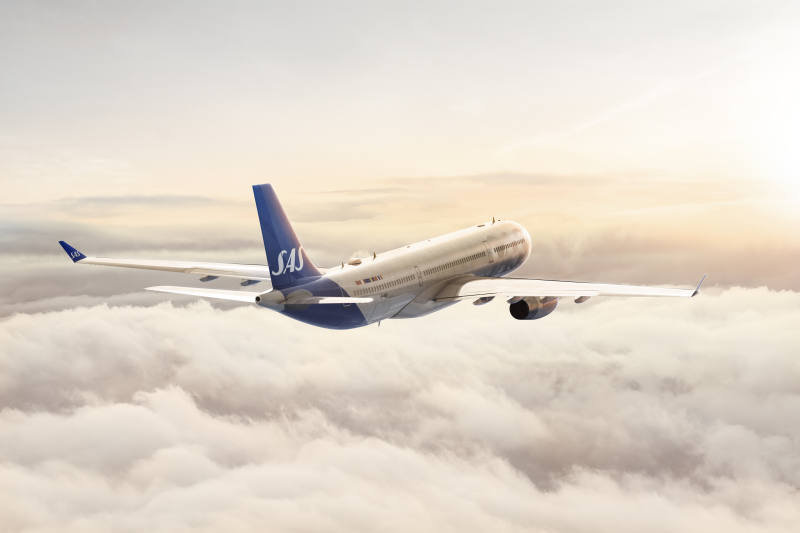
In the ever-evolving landscape of aviation, SAS (Scandinavian Airlines) is making headlines with two significant developments. A new partnership with Sunweb promises to reshape the charter flight market, while a recent polar route flight showcases the airline's commitment to sustainability. Together, these initiatives highlight SAS's ambition to lead in both service and environmental responsibility.
SAS recently signed a monumental deal with Sunweb, valued at 740 million SEK. This agreement replaces a previous contract worth 200 million SEK and extends through the summer of 2027. It’s a leap, not just in numbers, but in vision. SAS will operate charter flights from Denmark and Sweden to popular destinations like Corfu and Bodrum. This partnership reflects a shared commitment to growth and collaboration in the charter market.
The agreement also includes Airtours’ production, following Sunweb’s acquisition in Sweden. This move signals a strategic shift. Sunweb aims to expand its footprint in the Nordic region, and SAS is poised to be a key player in that expansion. The partnership is more than a contract; it’s a promise of quality and reliability. SAS’s Airbus A320neo will ferry Sunweb customers from major hubs like Arlanda, Gothenburg, and Copenhagen to 13 sun-soaked destinations, including Crete and Rhodes.
SAS is not just about numbers. It’s about connection. The airline serves over 25 million passengers annually, transporting 60,000 tons of cargo to 135 destinations worldwide. With a workforce of over 10,000, SAS embodies the spirit of collaboration. The airline's mission is clear: to connect Scandinavia with the world and vice versa. This partnership with Sunweb reinforces that mission, positioning SAS as a trusted partner in the charter sector.
On another front, SAS is tackling sustainability head-on. The recent polar route flight from Copenhagen to Los Angeles achieved a remarkable 20 percent reduction in CO₂ emissions per passenger. This flight is part of The Aviation Challenge (TAC), a program designed to push the boundaries of sustainable aviation. By optimizing cargo distribution and passenger load, SAS demonstrated that careful planning can yield significant environmental benefits.
Real-time collaboration with air traffic control allowed SAS to adjust cruising altitude and flight path, further enhancing fuel efficiency. The result? A reduction of 250 kilos of fuel and a substantial decrease in emissions. Ground operations also saw improvements, with optimized taxiing procedures cutting fuel consumption by over 100 kilograms. Additionally, 32 tons of sustainable aviation fuel (SAF) accounted for 40 percent of the total fuel used on this flight, showcasing the potential for greener long-haul travel.
While these achievements are commendable, SAS acknowledges the challenges ahead. Implementing these practices consistently across all flights is complex. Air traffic restrictions, limited SAF availability, and varying operational conditions can hinder progress. Yet, flights like TAC serve as vital testing grounds. They push the envelope of what’s possible in sustainable aviation.
SAS is committed to integrating these insights into its broader operations. The airline's dedication to sustainability is evident in its continuous initiatives, including fleet renewal and SAF integration. These efforts are not just about compliance; they are about leadership in an industry that must evolve.
The combination of the Sunweb partnership and the success of the polar route flight paints a picture of an airline in transition. SAS is not merely reacting to market demands; it is shaping the future of air travel. The partnership with Sunweb signifies a strategic alignment with quality and reliability, while the polar route flight exemplifies a commitment to environmental stewardship.
As SAS moves forward, it carries the weight of its legacy. Founded in 1946, the airline has a rich history of connecting people and places. Today, it stands at a crossroads, balancing tradition with innovation. The mission to achieve net-zero emissions by 2050 is ambitious, but SAS is determined to lead the charge.
In a world where environmental concerns are paramount, SAS is positioning itself as a pioneer. The recent developments are not just business moves; they are steps toward a sustainable future. The airline is not just flying passengers; it is flying the flag for responsible aviation.
As SAS continues to navigate the skies, it does so with a clear vision. The partnership with Sunweb and the success of the polar route flight are just the beginning. The journey toward a sustainable future is long, but SAS is ready to take flight. With each new initiative, the airline is proving that the sky is not the limit; it’s just the beginning.
SAS recently signed a monumental deal with Sunweb, valued at 740 million SEK. This agreement replaces a previous contract worth 200 million SEK and extends through the summer of 2027. It’s a leap, not just in numbers, but in vision. SAS will operate charter flights from Denmark and Sweden to popular destinations like Corfu and Bodrum. This partnership reflects a shared commitment to growth and collaboration in the charter market.
The agreement also includes Airtours’ production, following Sunweb’s acquisition in Sweden. This move signals a strategic shift. Sunweb aims to expand its footprint in the Nordic region, and SAS is poised to be a key player in that expansion. The partnership is more than a contract; it’s a promise of quality and reliability. SAS’s Airbus A320neo will ferry Sunweb customers from major hubs like Arlanda, Gothenburg, and Copenhagen to 13 sun-soaked destinations, including Crete and Rhodes.
SAS is not just about numbers. It’s about connection. The airline serves over 25 million passengers annually, transporting 60,000 tons of cargo to 135 destinations worldwide. With a workforce of over 10,000, SAS embodies the spirit of collaboration. The airline's mission is clear: to connect Scandinavia with the world and vice versa. This partnership with Sunweb reinforces that mission, positioning SAS as a trusted partner in the charter sector.
On another front, SAS is tackling sustainability head-on. The recent polar route flight from Copenhagen to Los Angeles achieved a remarkable 20 percent reduction in CO₂ emissions per passenger. This flight is part of The Aviation Challenge (TAC), a program designed to push the boundaries of sustainable aviation. By optimizing cargo distribution and passenger load, SAS demonstrated that careful planning can yield significant environmental benefits.
Real-time collaboration with air traffic control allowed SAS to adjust cruising altitude and flight path, further enhancing fuel efficiency. The result? A reduction of 250 kilos of fuel and a substantial decrease in emissions. Ground operations also saw improvements, with optimized taxiing procedures cutting fuel consumption by over 100 kilograms. Additionally, 32 tons of sustainable aviation fuel (SAF) accounted for 40 percent of the total fuel used on this flight, showcasing the potential for greener long-haul travel.
While these achievements are commendable, SAS acknowledges the challenges ahead. Implementing these practices consistently across all flights is complex. Air traffic restrictions, limited SAF availability, and varying operational conditions can hinder progress. Yet, flights like TAC serve as vital testing grounds. They push the envelope of what’s possible in sustainable aviation.
SAS is committed to integrating these insights into its broader operations. The airline's dedication to sustainability is evident in its continuous initiatives, including fleet renewal and SAF integration. These efforts are not just about compliance; they are about leadership in an industry that must evolve.
The combination of the Sunweb partnership and the success of the polar route flight paints a picture of an airline in transition. SAS is not merely reacting to market demands; it is shaping the future of air travel. The partnership with Sunweb signifies a strategic alignment with quality and reliability, while the polar route flight exemplifies a commitment to environmental stewardship.
As SAS moves forward, it carries the weight of its legacy. Founded in 1946, the airline has a rich history of connecting people and places. Today, it stands at a crossroads, balancing tradition with innovation. The mission to achieve net-zero emissions by 2050 is ambitious, but SAS is determined to lead the charge.
In a world where environmental concerns are paramount, SAS is positioning itself as a pioneer. The recent developments are not just business moves; they are steps toward a sustainable future. The airline is not just flying passengers; it is flying the flag for responsible aviation.
As SAS continues to navigate the skies, it does so with a clear vision. The partnership with Sunweb and the success of the polar route flight are just the beginning. The journey toward a sustainable future is long, but SAS is ready to take flight. With each new initiative, the airline is proving that the sky is not the limit; it’s just the beginning.